
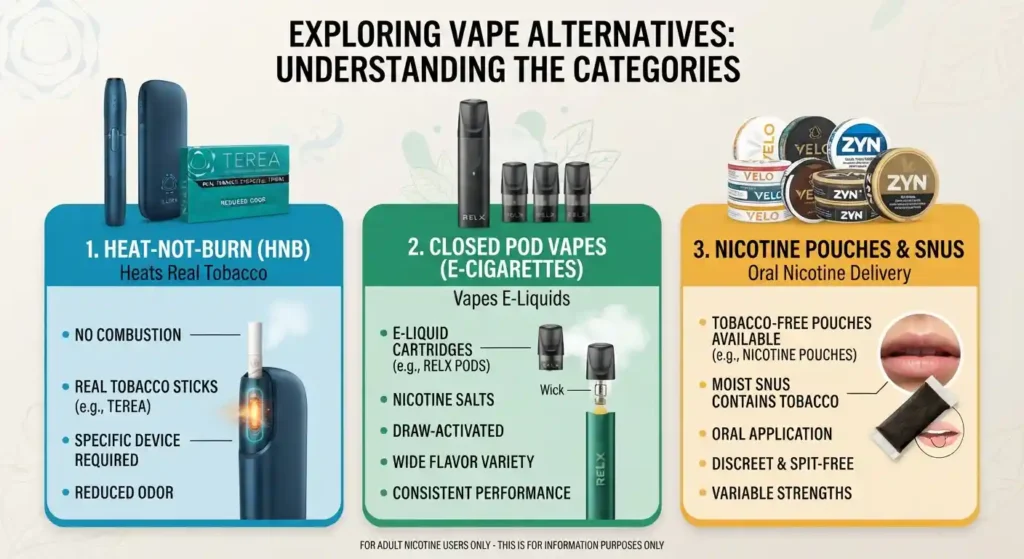
The market for modern nicotine and tobacco-related products has expanded significantly, giving adults more categories to consider when researching available technologies. Traditional cigarettes are no longer the only products discussed in conversations about nicotine. Heated tobacco systems, pod devices, disposable electronic cigarettes, and other formats now occupy different parts of the market.
These products can sometimes appear similar because many are compact and electronically powered. However, their underlying technologies are not necessarily the same. Understanding the distinction between heated tobacco products and vaping devices is therefore important for anyone researching the subject in the UAE.
Why Product Categories Matter
A common mistake when researching modern nicotine products is treating every electronic device as a vape. While some products use an electronic heating element, the material being heated and the way the product operates can be quite different.
Traditional cigarettes burn tobacco. Heated tobacco systems warm processed tobacco material at controlled temperatures. Electronic cigarettes generally heat a liquid formulation to create an aerosol.
The difference may not always be obvious from the outside, particularly when products are designed in compact formats. Looking at the underlying technology provides a much clearer comparison.
What Are Heated Tobacco Products?
Heated tobacco products are designed to heat tobacco rather than burn it in the same way as a conventional cigarette.


A dedicated tobacco stick or similar consumable is inserted into a compatible heating device. The device then generates heat without relying on conventional combustion.
TEREA is one example of a heated tobacco consumable designed for a compatible heating system. Its product category is therefore different from conventional e-liquid vaping products.
For people researching Terea Dubai, understanding this distinction is particularly useful because the term relates to a heated tobacco category rather than simply referring to a standard vape liquid or disposable electronic cigarette.
How Heated Tobacco Differs From Conventional Smoking
Traditional cigarettes depend on combustion. Tobacco is burned, producing smoke along with numerous substances generated during the combustion process.
Heated tobacco systems use controlled heating instead. Their purpose is to heat the tobacco material without the same combustion process associated with a traditional cigarette.
This technological distinction is one of the primary reasons heated tobacco products are treated as a separate category. However, a different heating method should not be interpreted as meaning that the product is harmless.
Tobacco products can contain nicotine, and nicotine is addictive. Adults should understand the risks associated with nicotine regardless of the delivery format.
What Are Pod-Based Vape Systems?
Pod systems belong to another category entirely.
Instead of heating processed tobacco, these devices generally use a liquid contained inside a pod. The liquid may contain nicotine, flavoring ingredients, and a base made from substances such as propylene glycol or vegetable glycerin.
The pod connects to a rechargeable electronic device. When activated, the heating element vaporizes or aerosolizes the liquid.
Some pod systems use pre-filled pods, while others are designed around refillable cartridges. Their compact size makes them visually similar to some heated tobacco devices, but their consumables and operating principles are different.
Understanding RELX and Similar Devices
RELX is commonly associated with the pod-based electronic cigarette category. Products in this segment generally use compact electronic devices together with compatible pods.
People searching for Relx Dubai may encounter discussions covering device formats, pod technology, nicotine content, and the broader UAE vaping market. From a technical perspective, the important point is that a pod system should not automatically be grouped together with heated tobacco products simply because both use electronic heating.
The consumable is one of the easiest ways to identify the distinction. A heated tobacco system uses a tobacco-based consumable, while a conventional pod vape uses e-liquid.
Why the Consumable Makes a Difference
The material being heated is central to understanding these products.
In a heated tobacco system, the consumable contains processed tobacco. In a typical pod-based electronic cigarette, the consumable contains an e-liquid formulation.
This affects the construction of the device as well. Heating systems need to be designed around the characteristics of the material they are intended to heat.
As a result, consumables are generally not interchangeable between unrelated product categories. A tobacco stick designed for one heating platform should not be treated as though it were an ordinary vape pod.
Battery and Heating Technology
Both categories can contain rechargeable electronic components, but their internal designs can vary considerably.
A pod device normally needs enough battery power to heat the coil or heating element used to aerosolize the liquid. Heated tobacco systems are engineered around the temperature and characteristics required to heat tobacco consumables.
Modern electronics allow manufacturers to control temperature, activation, charging, and other functions with considerable precision.
However, more sophisticated electronics do not eliminate the importance of correct handling. Batteries should be charged according to manufacturer instructions, and damaged devices should not be used.
Portability and Everyday Design
Compact dimensions are common across both categories because manufacturers aim to create products that are convenient to carry.
Heated tobacco devices may be designed around a dedicated heating chamber and specific consumable format. Pod systems typically use a battery section and a small pod.
The external appearance can therefore be misleading. Two products can have a similar rectangular shape while using completely different technologies.
When comparing devices, consumers should focus on the product’s specifications and intended consumables rather than relying only on photographs or physical design.
Nicotine Is Still an Important Consideration
The technological differences between product categories should not distract from the role of nicotine.
Many modern tobacco and vaping products contain nicotine. Nicotine is addictive, and its presence is an important factor when considering any product in this category.
People who do not currently use nicotine should not begin using these products simply because they are marketed as modern, compact, or technologically advanced.
Adults who already use nicotine should also be aware of the concentration and formulation associated with the particular product they are considering.
Regulation in the UAE
The UAE has specific rules concerning tobacco, electronic nicotine products, sales, advertising, age restrictions, and where certain products may be used.
These requirements can apply differently depending on the product category. Heated tobacco products and electronic cigarettes should therefore not automatically be assumed to have identical regulatory treatment.
Dubai also has restrictions concerning smoking and vaping in certain public environments. Consumers should check current official requirements before using a product in a particular location.
Because regulations can change, current UAE government guidance should always be treated as the most reliable source.
Environmental Considerations
Electronic products also raise questions about waste.
Reusable devices can remain in service while individual consumables are replaced. However, pods, cartridges, tobacco sticks, batteries, and other components can still create waste.
Disposable electronic products can create additional environmental concerns because the entire device may be discarded after its usable life.
Responsible disposal is therefore an important part of the broader conversation surrounding modern nicotine technology.
Avoiding Confusion Between Product Types
The terminology used online can sometimes create confusion. Words such as vape, pod, electronic cigarette, heated tobacco, and tobacco stick may appear in the same articles even though they describe different products.
A useful approach is to ask three simple questions:
What is being heated?
Is the device heating tobacco material or an e-liquid?
How is it heated?
Does the device use a dedicated tobacco-heating chamber or a coil-based liquid heating system?
What is the consumable?
Is it a tobacco stick, pre-filled pod, refillable pod, or another type of cartridge?
Answering these questions usually makes the category much easier to understand.
Making Sense of Modern Nicotine Technology
The development of heated tobacco systems and pod-based electronic cigarettes has created a market with many different product designs. Some focus on tobacco heating, while others rely on e-liquid and compact pod technology.
Although these products can look alike, their operating principles and consumables can be significantly different. This is why understanding the technology behind a product is more useful than judging it purely by its appearance or brand recognition.
Final Thoughts
TEREA, RELX, and other modern nicotine products belong to different technological categories, even when their compact designs make them appear similar. Heated tobacco systems are built around tobacco-based consumables, while pod-based electronic cigarettes generally use e-liquid.
For adults researching these products in the UAE, understanding the difference between heating tobacco and heating e-liquid is an important starting point. Health considerations, nicotine dependence, environmental impact, and current UAE regulations should also remain part of any informed discussion.
A clear understanding of the categories makes it easier to interpret product information and distinguish technical differences from marketing terminology.
Related Reading: How Digital Marketing and Quality Link Building Help Businesses Grow in Competitive Markets — full guide
