
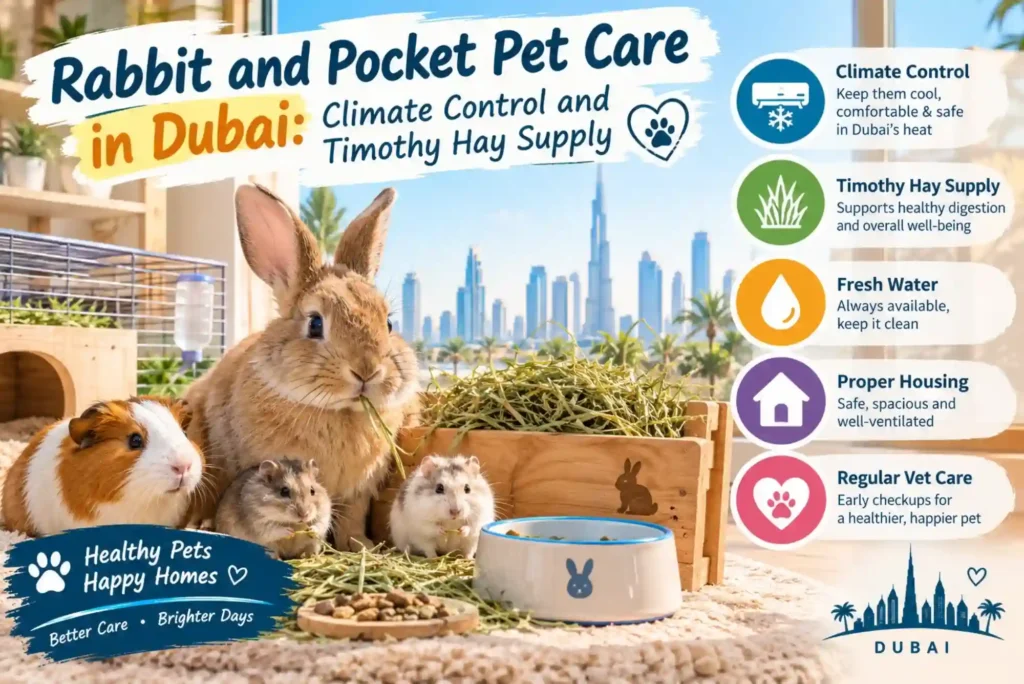
Rabbit and Pocket Pet Care in Dubai: Climate Control and Timothy Hay Supply
Introduction
Keeping a rabbit or another small companion animal in Dubai requires more planning than simply providing food, water, and a comfortable cage. Dubai’s hot climate creates particular challenges for rabbits and other small pets because many of these animals are sensitive to high temperatures, poor ventilation, dehydration, and sudden environmental changes. For rabbit owners, climate control is not an optional luxury during the hotter months. It is a fundamental part of responsible pet care.
Rabbits are especially sensitive to heat. Veterinary guidance from VCA Animal Hospitals notes that rabbits tolerate cold better than heat and are highly susceptible to heatstroke. It recommends keeping their environmental temperature at or below approximately 80°F (26°C) and maintaining good ventilation. This is particularly relevant in Dubai, where outdoor temperatures can become much higher than a rabbit’s safe comfort range.
Diet is equally important. Timothy hay is one of the most useful foods for adult rabbits because good-quality grass hay should form the bulk of a rabbit’s diet and should be available continuously. Hay supports normal digestive function while also providing an important source of long-stem fiber.
For owners searching for Rabbit and Pocket Pet Care in Dubai: Climate Control and Timothy Hay Supply, the key is to think about the entire environment rather than one individual part of care. Temperature, airflow, hydration, diet, housing, exercise, hygiene, veterinary monitoring, and reliable access to appropriate hay all work together.
Understanding Dubai’s Climate and Rabbit Health
Dubai’s climate presents a unique challenge for rabbits because their bodies are not designed to cope well with prolonged heat. Unlike humans, rabbits cannot cool themselves through sweating. As temperatures rise, they depend heavily on environmental conditions such as shade, airflow, and access to water.
This makes indoor housing the safer choice for most pet rabbits in Dubai. A rabbit living in an air-conditioned home can be protected from extreme outdoor heat, but simply turning on an air conditioner is not enough. The rabbit’s enclosure should also be positioned away from direct sunlight, poorly ventilated corners, hot balconies, and areas where temperatures fluctuate sharply.


A common mistake is to place a rabbit near a window because the location appears bright and comfortable. Direct sunlight can rapidly increase the temperature of the enclosure, especially when glass traps heat. A room that feels acceptable to a person may still become too warm inside a rabbit’s enclosure.
Air conditioning should provide stable cooling rather than repeated dramatic changes. The objective is to maintain a comfortable, consistent environment. Fans can help circulate air, but they should not be used as a substitute for proper cooling during extreme heat.
Why Heat Control Is Essential for Rabbits
Heatstroke is one of the most serious climate-related risks for rabbits. Veterinary sources describe rabbits as particularly vulnerable to overheating and note that severe heatstroke can cause lethargy, breathing difficulty, collapse, and other emergency symptoms.
In Dubai, owners should therefore treat climate management as part of everyday rabbit care rather than something to consider only during the hottest days.
The enclosure should remain in a cool, shaded, well-ventilated part of the home. Fresh water should always be available. Owners should also monitor the rabbit’s behavior because changes in activity, appetite, breathing, or posture can indicate that the animal is struggling.
If a rabbit appears severely affected by heat, veterinary attention should be sought promptly. Heatstroke is a medical emergency and should not be managed solely with home remedies.
Dubai Municipality’s Veterinary Services Section provides preventive and curative veterinary services and regulates veterinary establishments in the emirate. Its official information also lists veterinary clinics and animal-health services available to residents.
Choosing the Right Indoor Location
The location of a rabbit’s enclosure can make a major difference in Dubai.
A suitable indoor area should be away from direct sunlight and strong drafts while still having good air circulation. Kitchens may not always be ideal because of temperature fluctuations, cooking fumes, and limited floor space. Balconies are generally unsuitable during Dubai’s hot periods because temperatures can rise rapidly even when outdoor conditions initially seem manageable.
A quiet room can be useful because rabbits are prey animals and often feel more secure when they have a place to retreat. The enclosure should include a sheltered hiding area where the rabbit can rest without feeling exposed.
The flooring also matters. Rabbits spend significant amounts of time on their feet, so unsuitable flooring can contribute to foot problems. VCA guidance recommends providing appropriate solid surfaces and avoiding housing arrangements that expose rabbits to prolonged uncomfortable wire flooring.
The enclosure should also be large enough to allow the rabbit to stretch, move, turn comfortably, and engage in normal behavior. A small cage should not be treated as the rabbit’s entire living environment.
Rabbit-Proofing the Home
Indoor rabbit care in Dubai often involves more than buying an enclosure. Rabbits are naturally curious and enjoy chewing, which means the surrounding room needs to be prepared carefully.
Electrical cables are particularly important. Rabbits can chew exposed wires, creating a serious risk of injury. Household plants should also be checked because some plants can be toxic if eaten.
Furniture edges, carpets, wooden surfaces, and other materials may also attract chewing. A rabbit-proof room or controlled play area allows the animal to exercise while reducing the risk of household accidents.
VCA recommends allowing rabbits to roam only in a properly rabbit-proofed environment or under close supervision because chewing electrical cords, carpets, furniture, and potentially poisonous plants can result in injuries.
This becomes especially useful in Dubai because indoor living is often the most practical way to protect rabbits from extreme outdoor temperatures.
Timothy Hay and the Rabbit’s Digestive System
Timothy hay is central to good rabbit nutrition. Rabbits are herbivores with a digestive system designed around high-fiber plant material. Good-quality grass hay should therefore be available throughout the day.
VCA Animal Hospitals identifies Timothy, orchard, and brome hay as suitable grass hays and states that high-quality grass hay should make up the bulk of a rabbit’s diet and remain available at all times.
The importance of hay goes beyond simply providing calories. Long-stem fiber supports normal digestive movement and encourages natural chewing behavior. Rabbits also need to chew regularly because their teeth continuously grow.
For adult rabbits, Timothy hay is a particularly common choice because it provides suitable fiber without being excessively rich. Alfalfa hay has a different nutritional profile and is generally more appropriate for young rabbits in certain circumstances rather than being the routine primary hay for healthy adult rabbits.
Owners should discuss individual dietary needs with a rabbit-experienced veterinarian when caring for young, elderly, pregnant, ill, or underweight rabbits.
Keeping Timothy Hay Fresh in Dubai
Dubai’s heat and humidity can affect how hay is stored. Owners should avoid leaving large quantities of hay exposed to heat, moisture, or direct sunlight.
Hay should be kept in a dry, well-ventilated storage area. A sealed container that traps moisture may not be ideal if the hay is not completely dry. The goal is to protect the hay while allowing appropriate airflow.
Good hay should have a pleasant natural grassy smell and should not appear damp, moldy, excessively dusty, or unusually discolored. If hay appears spoiled or contaminated, it should not be fed to the rabbit.
Because Dubai households may use air conditioning for much of the year, indoor storage is generally more practical than keeping hay in an outdoor storage room, balcony, car, or hot utility area.
Reliable supply is also important. Rabbit owners should avoid waiting until the last small bag is almost empty before buying more. Establishing a consistent source can help maintain dietary continuity.
Finding a Reliable Timothy Hay Supply
The availability of suitable hay is an important consideration before bringing a rabbit home. A rabbit’s diet should not depend on occasional purchases or whatever forage happens to be available locally.
Owners should establish a reliable supply of quality grass hay and maintain appropriate storage conditions. Buying larger quantities may be convenient, but only if the hay can be stored correctly without exposure to heat or moisture.
Pet owners should also be careful when changing brands or types of hay. Rabbits can be sensitive to changes in diet, and sudden dietary changes may affect appetite and digestion.
When changing hay, it is generally sensible to introduce the new product gradually while monitoring the rabbit’s appetite and droppings. If the rabbit suddenly stops eating, professional veterinary advice is important.
Water Management in Dubai’s Heat
Fresh water is essential for rabbits all year round, but it becomes particularly important during hot weather.
Water should be refreshed regularly and the container should be cleaned frequently. Some rabbits prefer bowls because they can drink naturally from them, while others may be familiar with bottles. Providing an appropriate setup based on the rabbit’s habits can encourage adequate water consumption.
Water should not be allowed to sit in direct sunlight. A bowl positioned near a window or warm outdoor area can heat up quickly.
Owners should monitor water consumption as part of routine care. A sudden increase or decrease in drinking can sometimes indicate an underlying problem and should be discussed with a veterinarian when it is persistent or accompanied by other changes.
Recognizing Heat Stress
Rabbit owners should become familiar with their pet’s normal behavior so that unusual changes are easier to identify.
A rabbit experiencing serious heat stress may become unusually quiet or weak. Breathing may become abnormal, and severe cases can progress rapidly. VCA notes that heatstroke can involve lethargy, breathing difficulty, and collapse and requires veterinary management.
A rabbit that appears seriously overheated should not simply be left in the hope that it will recover. Immediate veterinary advice is appropriate.
Prevention is much safer than waiting for heatstroke to occur. Maintaining a stable indoor environment, providing ventilation and fresh water, keeping the enclosure away from sunlight, and monitoring indoor temperature are all important parts of responsible care.
Pocket Pets Require Species-Specific Care
The phrase “pocket pet” can include several small companion animals, but rabbits should not automatically be treated like hamsters, guinea pigs, mice, or other species.
Each species has different dietary, temperature, housing, and social requirements. A food that is appropriate for one small mammal may not be suitable for another.
For this reason, owners should identify the exact species before selecting food, bedding, enclosure equipment, or climate settings.
Rabbits have particular requirements because of their digestive system, chewing behavior, and sensitivity to heat. Guinea pigs, for example, have their own nutritional requirements, while hamsters have different housing and activity patterns.
A Dubai household considering a pocket pet should therefore research species-specific care rather than relying on generic “small pet” advice.
Exercise and Enrichment for Indoor Rabbits
Climate control should not mean that rabbits remain confined to a small enclosure all day.
Rabbits need opportunities for movement and normal behaviors. A secure indoor exercise area can provide space for hopping, exploring, chewing safe toys, and interacting with their surroundings.
Exercise areas should be rabbit-proofed carefully. Electrical cables, toxic plants, unsafe gaps, sharp objects, and inaccessible spaces should be removed or protected.
Enrichment can also be provided through safe chew materials, hiding spaces, tunnels, and opportunities to forage. Timothy hay can be incorporated into enrichment by placing it in appropriate hay racks, boxes, or feeding areas.
A stimulating indoor environment can help support both physical activity and natural behavior while avoiding the risks associated with Dubai’s extreme outdoor temperatures.
Cleaning and Hygiene
A rabbit’s living environment should be cleaned regularly. Wet bedding, soiled litter, spoiled food, and contaminated hay should not be allowed to accumulate.
Daily spot cleaning can help maintain hygiene, while deeper cleaning can be performed according to the enclosure and litter setup.
VCA recommends regular removal of feces and urine and routine cleaning of the litter area.
Good ventilation is also important. However, cleaning products should be used carefully because strong chemical fumes can be irritating to small animals.
The rabbit should be kept away from freshly cleaned surfaces until they are safe and dry.
Grooming and General Health Monitoring
Routine observation is one of the simplest ways to identify changes in a rabbit’s health.
Owners should pay attention to appetite, water consumption, droppings, movement, grooming behavior, and general activity. Rabbits can hide signs of illness, so subtle changes may be significant.
Dental health is particularly important because rabbit teeth continuously grow. A high-fiber diet with abundant hay supports natural chewing, but dental problems can still occur.
Coat condition should also be monitored. Long-haired rabbits may require more grooming, particularly during shedding periods.
Regular veterinary examinations are useful because a veterinarian can assess teeth, weight, digestive health, skin, eyes, and other aspects of the rabbit’s condition.
Dubai Municipality’s Veterinary Services Section provides animal-health services and oversees veterinary establishments within the emirate.
What to Do When a Rabbit Stops Eating
A rabbit that stops eating should not be treated as simply being a picky eater.
Rabbits depend heavily on continuous digestive activity. A significant reduction in food intake can become a serious health concern, particularly when accompanied by reduced droppings, lethargy, abdominal discomfort, or other changes.
Owners should contact a veterinarian promptly if a rabbit stops eating or shows signs of digestive illness.
This is another reason Timothy hay should always be available. Maintaining a fiber-rich diet supports normal digestive function, while sudden dietary changes, inadequate fiber, stress, dental problems, and other conditions can contribute to digestive disturbances.
Home treatment should not replace veterinary evaluation when a rabbit appears ill.
Veterinary Support in Dubai
Having access to veterinary care is an important part of responsible rabbit ownership. Before acquiring a rabbit, owners should identify a veterinary clinic that is comfortable treating rabbits and other small mammals.
Not every general pet-care service has the same level of experience with rabbits, so asking about rabbit care in advance can be useful.
Dubai Municipality’s veterinary system provides preventive and curative services and regulates veterinary establishments. Its official Veterinary Services Section also provides information about municipal veterinary clinics and appointment procedures.
The official Dubai Municipality website is a useful starting point for current municipal veterinary and animal-welfare information.
Adoption and Responsible Rabbit Ownership
Before adopting or purchasing a rabbit, prospective owners should understand that rabbits can live for many years and require consistent care throughout their lives.
The decision should include consideration of indoor space, air conditioning, hay supply, veterinary costs, daily cleaning, exercise, enrichment, and emergency care.
For people interested in adopting pets in the UAE, Ranker.ae’s pet adoption resource provides additional information about pet adoption.
Responsible adoption means choosing an animal whose needs can realistically be met. A rabbit should never be acquired simply because it appears easy to care for or requires less space than a dog.
Planning for Dubai’s Summer Months
Summer preparation should begin before temperatures become extreme.
Air conditioning should be checked to ensure the room can remain stable and comfortable. Hay supplies should be reviewed, water containers cleaned, and the rabbit’s enclosure examined for ventilation problems.
Owners who travel should also arrange reliable pet care. A rabbit should not be left alone for extended periods simply because food and water have been provided.
The caregiver should understand the rabbit’s normal routine and know where to obtain veterinary assistance if the animal becomes sick.
A written care routine can be helpful for anyone looking after the rabbit temporarily, particularly when feeding times, medications, grooming, or veterinary requirements are involved.
Building a Long-Term Care Routine
The most successful rabbit-care routine is consistent rather than complicated.
A rabbit needs an appropriate indoor environment, continuous access to suitable grass hay, fresh water, a balanced diet, exercise, enrichment, hygiene, and veterinary attention when needed.
Dubai’s climate makes temperature management especially important. Indoor housing with reliable cooling can protect rabbits from extreme heat, while good ventilation helps maintain a comfortable environment.
Timothy hay should remain a central part of the adult rabbit’s diet. It should be stored correctly and replaced if it becomes damp, moldy, contaminated, or otherwise unsuitable.
Owners should also remember that climate control and nutrition are connected. A rabbit that becomes overheated may become less active or eat differently, making close observation especially important.
Conclusion
Rabbit and pocket pet care in Dubai requires a thoughtful approach to climate, nutrition, housing, hygiene, and veterinary support. For rabbits, temperature control is one of the most important considerations because these animals are highly vulnerable to heat stress and heatstroke. Veterinary guidance recommends maintaining a cool, well-ventilated environment and avoiding excessive temperatures.
Timothy hay is equally important because high-quality grass hay should form the foundation of an adult rabbit’s diet and remain available throughout the day. Maintaining a reliable supply and storing it correctly becomes especially important in Dubai’s warm climate.
For Dubai residents, the safest approach is to keep rabbits indoors in a properly cooled environment, provide fresh water and abundant suitable hay, rabbit-proof their living space, monitor appetite and behavior, and seek veterinary care when something changes.
Dubai Municipality continues to maintain veterinary and animal-welfare services within the emirate, providing an additional official resource for residents who need current information about animal care and related services.
For broader pet information, Ranker.ae can also be used as a general pet-care resource.
With the right preparation, rabbit ownership in Dubai can be both practical and rewarding. The most important principle is to design the rabbit’s environment around its biological needs rather than around the climate outside. A cool indoor space, dependable Timothy hay supply, fresh water, safe exercise area, and access to appropriate veterinary care can provide a strong foundation for a healthy and comfortable life.
