
Introduction
Understanding Anchor Text Types Explained (Branded/Generic/Partial) is essential for anyone serious about SEO and link building. Anchor text is the clickable text in a hyperlink, and it plays a major role in how search engines interpret your website’s relevance and authority. When used correctly, it improves rankings, builds credibility, and enhances user experience. However, poor usage can lead to penalties or reduced visibility.
In this guide, we will explore different anchor text types, how they work, and how to use them strategically. Whether you are a beginner or an experienced SEO professional, mastering Anchor Text Types Explained (Branded/Generic/Partial) will help you create a more effective linking strategy.
What Is Anchor Text in SEO?
Anchor text is the visible, clickable text in a hyperlink. It provides context about the linked page to both users and search engines. For example, when you click on a phrase like best SEO tools, the words you click are the anchor text.
Search engines use anchor text to understand what the linked page is about. Therefore, choosing the right type of anchor text can significantly influence rankings.
When discussing Anchor Text Types Explained (Branded/Generic/Partial), it’s important to remember that diversity is key. Using only one type repeatedly can look unnatural and may harm your SEO efforts.
Why Anchor Text Matters for SEO
Anchor text is a powerful ranking signal. It tells search engines how relevant your content is to specific keywords. At the same time, it improves navigation and helps users find valuable resources.


A well-balanced anchor text profile supports building credible backlinks by showing search engines that your links are natural and trustworthy. This is crucial for long-term SEO success.
In contrast, over-optimized anchor text can trigger spam filters. That is why understanding Anchor Text Types Explained (Branded/Generic/Partial) is critical for safe and effective optimization.
Types of Anchor Text Explained
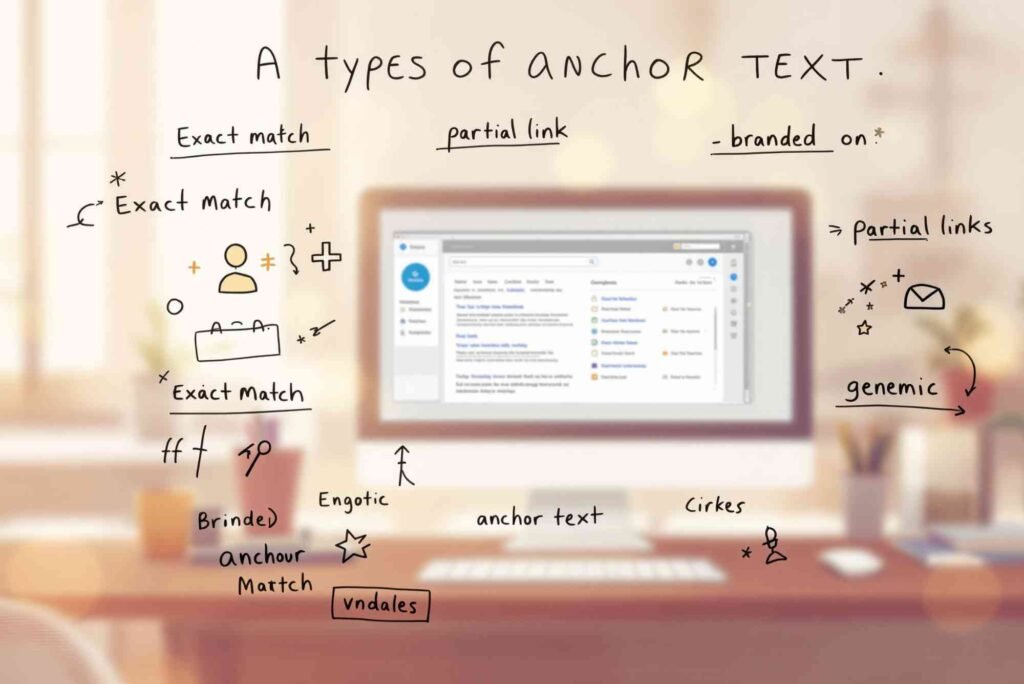
There are several types of anchor text, but the most important ones are branded, generic, and partial match. Each serves a different purpose in your SEO strategy.
Branded Anchor Text
Branded anchor text uses the name of a brand or company. For example, using your website name as a link is considered branded anchor text.
This type is the safest and most natural. It signals trust and authority to search engines. Many high-quality backlinks use branded anchors because they look organic.
Branded anchors are especially useful when you are trying to establish credibility. They also help create a strong brand identity online.
Generic Anchor Text
Generic anchor text includes phrases like “click here,” “read more,” or “visit this page.” These anchors do not contain keywords or brand names.
Although they do not directly improve keyword rankings, they are important for maintaining a natural link profile. Search engines expect to see some level of generic anchors in your backlink profile.
Using generic anchors wisely ensures that your SEO strategy does not appear manipulative. It adds diversity, which is essential when applying Anchor Text Types Explained (Branded/Generic/Partial).
Partial Match Anchor Text
Partial match anchor text includes a variation of your target keyword along with other words. For example, instead of using “SEO services,” you might use “affordable SEO services for small businesses.”
This type is highly effective because it provides context while avoiding over-optimization. It helps search engines understand the topic of the linked page without appearing spammy.
Partial match anchors are widely used in content marketing and guest posting. They strike a balance between relevance and natural usage.
How to Use Anchor Text Strategically
Applying Anchor Text Types Explained (Branded/Generic/Partial) effectively requires a balanced approach. You should not rely on a single type of anchor text. Instead, combine different types to create a natural link profile.
Start by prioritizing branded anchors. Then, mix in generic and partial match anchors to maintain diversity. This approach reduces risk and improves long-term performance.
For example, when working on link-building strategies, you can naturally include links such as building credible backlinks within your content. This not only enhances user experience but also strengthens your SEO foundation.
Similarly, when offering services, you can incorporate terms like backlink packages in a contextual manner. This ensures your links remain relevant and useful to readers.
Best Practices for Anchor Text Optimization
To fully benefit from Anchor Text Types Explained (Branded/Generic/Partial), you need to follow proven best practices. First, always focus on relevance. Your anchor text should match the content of the linked page.
Second, avoid keyword stuffing. Overusing exact keywords can trigger penalties and reduce trust. Instead, use natural variations and synonyms.
Third, keep user experience in mind. Anchor text should be clear, descriptive, and helpful. If users understand where the link leads, they are more likely to click.
Finally, maintain consistency across your website. A well-structured linking strategy improves both usability and SEO performance.
Common Mistakes to Avoid
Many website owners misuse anchor text, which can harm their rankings. One common mistake is over-optimization. Using the same keyword repeatedly as anchor text looks unnatural.
Another mistake is using irrelevant anchors. If your anchor text does not match the linked content, it confuses both users and search engines.
Ignoring diversity is also a major issue. A healthy mix of branded, generic, and partial anchors is essential for success.
By understanding Anchor Text Types Explained (Branded/Generic/Partial), you can avoid these pitfalls and build a strong SEO strategy.
Anchor Text and Google Algorithm
Search engines, especially Google, have become smarter over time. They now analyze anchor text patterns to detect spam and manipulation.
Updates like Penguin specifically target unnatural link-building practices. This means that using anchor text incorrectly can lead to penalties.
However, when you follow the principles of Anchor Text Types Explained (Branded/Generic/Partial), you create a natural and balanced link profile. This improves your chances of ranking higher while staying safe from algorithm updates.
Real-World Application of Anchor Text
In real-world SEO campaigns, anchor text plays a key role in content marketing and outreach. When writing guest posts, you should use a mix of anchor types to keep your links natural.
For example, branded anchors can introduce your website, while partial match anchors can target specific keywords. Generic anchors can be used to maintain balance.
This approach ensures that your backlink profile looks organic. It also improves your website’s authority and visibility over time.
Mastering Anchor Text Types Explained (Branded/Generic/Partial) is essential for effective SEO. Anchor text is more than just clickable text; it is a powerful tool that influences rankings, user experience, and website authority.
By using a balanced mix of branded, generic, and partial match anchors, you can create a natural and effective link profile. This not only improves your SEO performance but also protects your website from penalties.
If you want to grow your website and achieve long-term success, start optimizing your anchor text strategy today. Focus on quality, relevance, and diversity to stay ahead in the competitive SEO landscape.
FAQs
What are the main types of anchor text?
The main types include branded, generic, and partial match anchor text. Each serves a different purpose in SEO.
Which anchor text is best for SEO?
There is no single best type. A mix of branded, generic, and partial match anchors works best.
Is exact match anchor text bad?
Not always, but overusing it can lead to penalties. Use it sparingly and combine it with other types.
How many anchor texts should I use?
There is no fixed number. Focus on creating a natural and diverse link profile.
Can anchor text improve rankings?
Yes, when used correctly, anchor text helps search engines understand your content and improve rankings.