
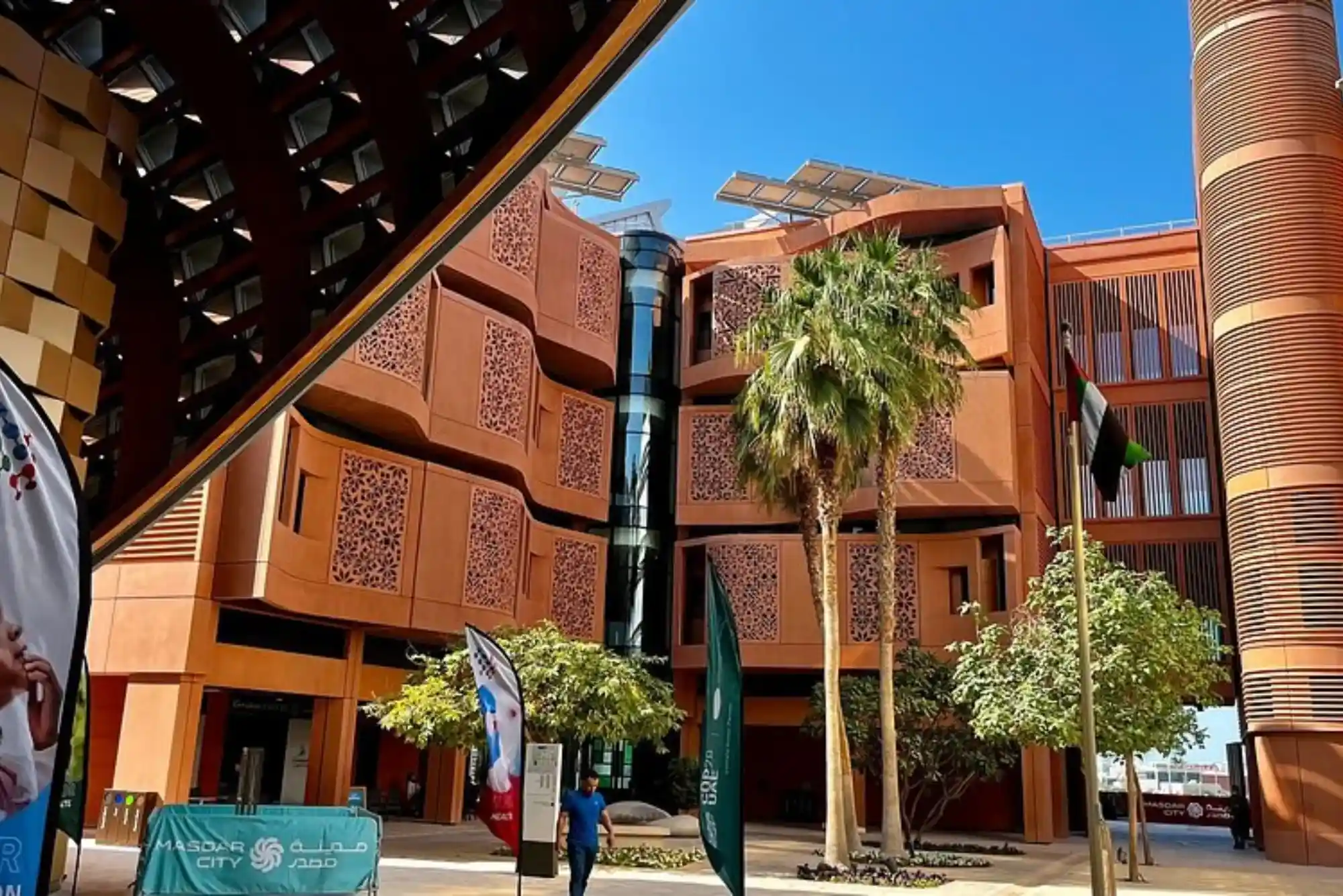
In Dubai, green building compliance is no longer optional. Al Sa’fat certification is mandatory for
every new project seeking a building permit, and the standards are tightening in line with the
emirate’s commitments under the Dubai 2040 Urban Master Plan. Most practices working in
architecture design Dubai now have a working knowledge of the compliance requirements.
Fewer have integrated sustainability into their design thinking in a way that produces buildings
that perform well once occupied, not just on paper.
The Gap Between Certification and Performance
A building can achieve Al Sa’fat Silver or LEED Gold and still be uncomfortable to occupy,
expensive to run, and poorly adapted to its climate. Certification is a documentation exercise as
much as a design one — the scores reflect what was specified at the time of submission. They
do not always reflect what was built, and they rarely capture how the building performs once
the occupant moves in and starts using it.
The buildings that close this gap are those where sustainability decisions were embedded at
the concept stage — orientation, massing, shading strategy, envelope performance — rather
than added as a specification layer at the end of the design process. These two approaches
produce very different buildings, even when they arrive at the same certificate rating.
What Genuine Climate-Responsive Design Looks Like
“The most sustainable building in Dubai is not the one with thehighest certificate rating. It is the one that was designed to work withits climate from the first concept sketch.”
Climate-responsive architecture in the Gulf begins with decisions that carry disproportionate
weight: building orientation relative to the sun’s path, the depth and positioning of shading on
each facade, and the thermal performance of the building envelope. These decisions reduce
the load that mechanical systems are asked to manage — and they cannot be meaningfully
compensated for later. A practice that treats climate as a design input from the earliest stage
will produce a fundamentally different building from one that addresses it at specification stage.
Water: The Underweighted Sustainability Variable
Dubai’s green building frameworks weight energy efficiency heavily — Al Sa’fat allocates
approximately 43% of its points to energy performance. Water conservation receives
considerably less emphasis, despite the UAE’s position as one of the most water-stressed
countries in the world. Responsible design in this context treats water with the same rigour as
energy: greywater recycling, low-flow fixtures, drought-tolerant landscaping, and irrigation
systems that respond to actual soil conditions rather than fixed schedules.
The Financial Case for Genuine Sustainability
Green-certified properties in Dubai consistently outperform non-certified equivalents on rental
yield and capital appreciation. Corporate tenants increasingly require certified assets as part of
their ESG commitments. And as energy and water costs rise over time, the operational savings
from genuinely well-designed buildings compound across the asset’s lifetime in ways that make
the upfront design investment straightforward to justify.
Sustainability, properly integrated into a design process, is not a constraint on architecture — it
is a generator of it. View Teal Design projects to see how climate performance and design
quality can be pursued as a single ambition rather than competing priorities.