
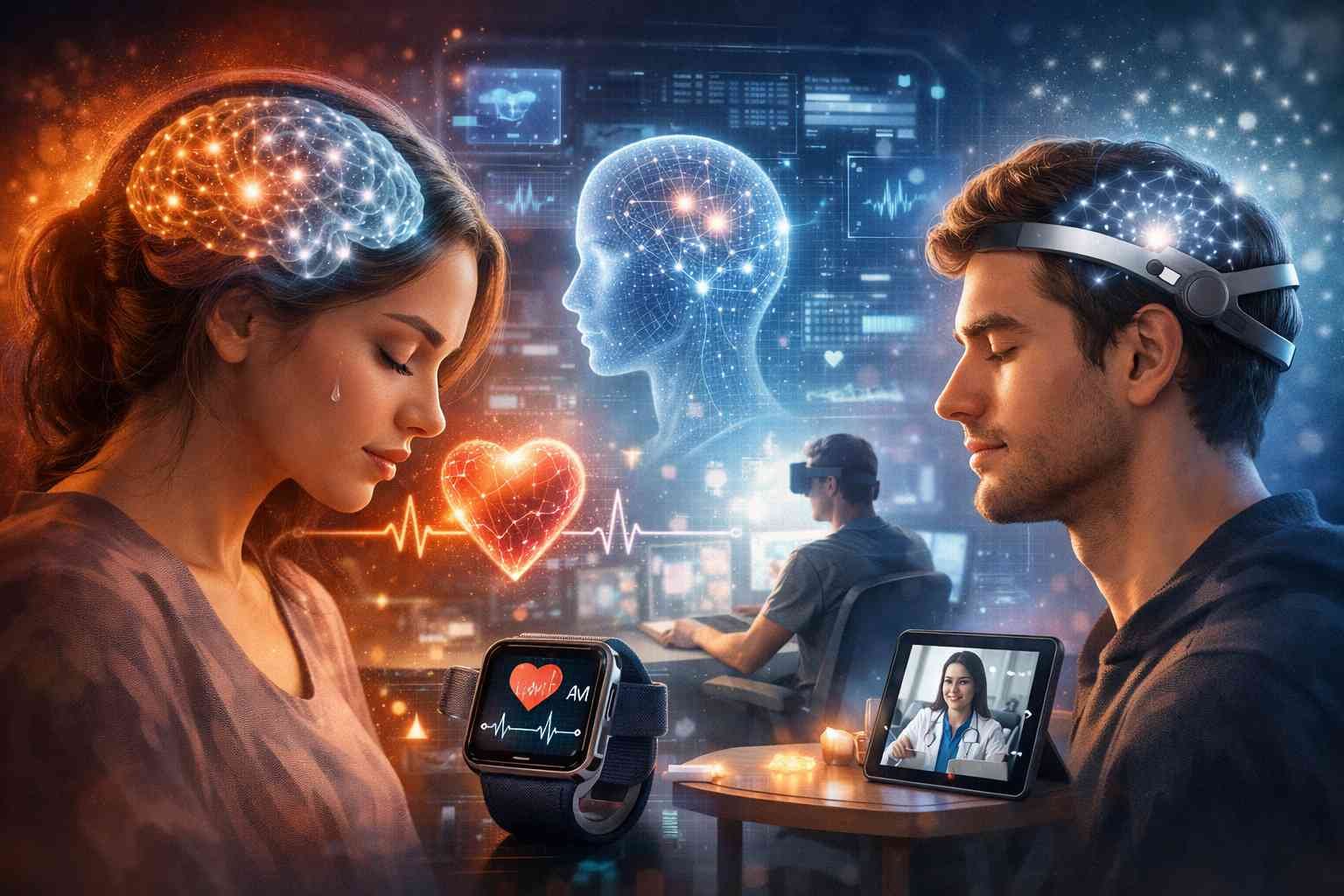
For a long time, we’ve treated our heads and our bodies like they live in different zip codes. If you had a stomach ache, you saw a GP; if you felt overwhelmed or anxious, you sought a therapist. But anyone who’s ever felt “butterflies” before a big presentation or a “heavy heart” after bad news knows that the line between emotion and mental health and our physical biology isn’t just thin—it’s practically non-existent.
Today, thanks to a massive leap in wearable tech and biosensors, we’re finally bridging that gap. We’re moving away from “I think I feel stressed” to “My body is showing signs of physiological strain.” This shift is changing how we approach wellness, especially in fast-paced hubs like the UAE, where the pressure to perform is constant.
The Physicality of a Feeling
To understand how technology helps, we first have to debunk the myth that emotions are “just in your head.” When you experience a strong emotion, your brain triggers a cascade of chemical and electrical signals.
For instance, chronic stress isn’t just a mood; it’s the over-activation of the Hypothalamic-Pituitary-Adrenal (HPA) axis. This system pumps out cortisol and adrenaline, which, over time, can wreak havoc on your sleep, metabolism, and even your heart health. If you’re constantly “on edge,” your body is physically staying in a state of high alert.
The challenge has always been that these internal shifts are invisible—until now. Modern technology allows us to see the “footprints” of our emotions in real-time. By tracking metrics like Heart Rate Variability (HRV), skin temperature, and sleep architecture, wearables provide a mirror for our internal state.
How Tech Turns “Vibes” into Data
The real breakthrough isn’t just gathering data; it’s the interpretation. In the past, a smartwatch might just tell you that your heart rate is high. Today’s devices, like the ones highlighted in recent public health discussions by experts like Prof. Haleama Al Sabbah, use sophisticated algorithms to categorize these physical signals into emotional states.
By analyzing the subtle patterns in your pulse and nervous system activity, technology can now identify whether you’re in a state of “high-activation” (like anger or anxiety) or “low-activation” (like fatigue or sadness). This matters because it validates the link between emotion and mental health. When you see a notification that your stress levels have been “High” for four hours, it’s a nudge to realize that your mental state is having a tangible impact on your physical longevity.
From Reactive to Proactive: The UAE Perspective
In regions like the UAE, where professional lives are demanding and the environment can be intense, this tech is becoming a vital tool for preventive care. People are no longer waiting for a total burnout to seek help. Instead, they’re using “Digital Health Clovers” or daily wellness scores to check in with themselves.
If your sleep data shows that you aren’t getting enough REM sleep—the stage crucial for emotional processing—you can predict that you’ll be more irritable or less resilient the next day. This foresight allows for a “proactive” rather than “reactive” approach to wellness. You might choose to skip a high-intensity workout in favor of yoga, or swap a third cup of coffee for a guided breathing session.
The Power of Nutrition and Lifestyle
It’s also worth noting that technology is helping us see how our physical habits feed back into our mental state. We know that what we eat shapes how we feel. High-sugar diets can cause “glucose spikes” that mimic the physical sensation of a panic attack.
By logging meals and monitoring energy levels through integrated health apps, users can see the direct correlation between their nutrition and their mood. In the Middle East, there’s a growing movement toward returning to “mood-stabilizing” traditional foods—like omega-3 rich fish and magnesium-packed dates—while using tech to stay accountable to these healthy choices.
Breaking the Stigma through Science
Perhaps the greatest benefit of using technology to bridge this gap is the reduction of stigma. When we can see that our emotion and mental health challenges are tied to measurable biological data, it takes the “shame” out of the equation. It’s hard to tell yourself to “just get over it” when your HRV is tanking and your cortisol markers are spiking. It turns a mental health struggle into a health management task.
Final Thoughts
We are entering an era where your watch might know you’re headed for a “bad day” before you’ve even finished your morning coffee. While that might sound a bit “sci-fi,” it’s actually incredibly empowering. By using technology to monitor the physical side of our emotions, we gain the tools to protect our mental well-being more effectively than ever before.
The gap between the mind and the body is finally closing. And in that space, we’re finding a more holistic, compassionate, and data-driven way to live.